खुली डायरी बनाम सवालों वाली डायरी: कौन-सा तरीक़ा बेहतर
Free writing और guided journaling broad, overlapping categories हैं। Research कोई universal winner नहीं चुनती; यह guide practical structure चुनने में मदद करती है।
अपडेटेड: 17 जून 2026
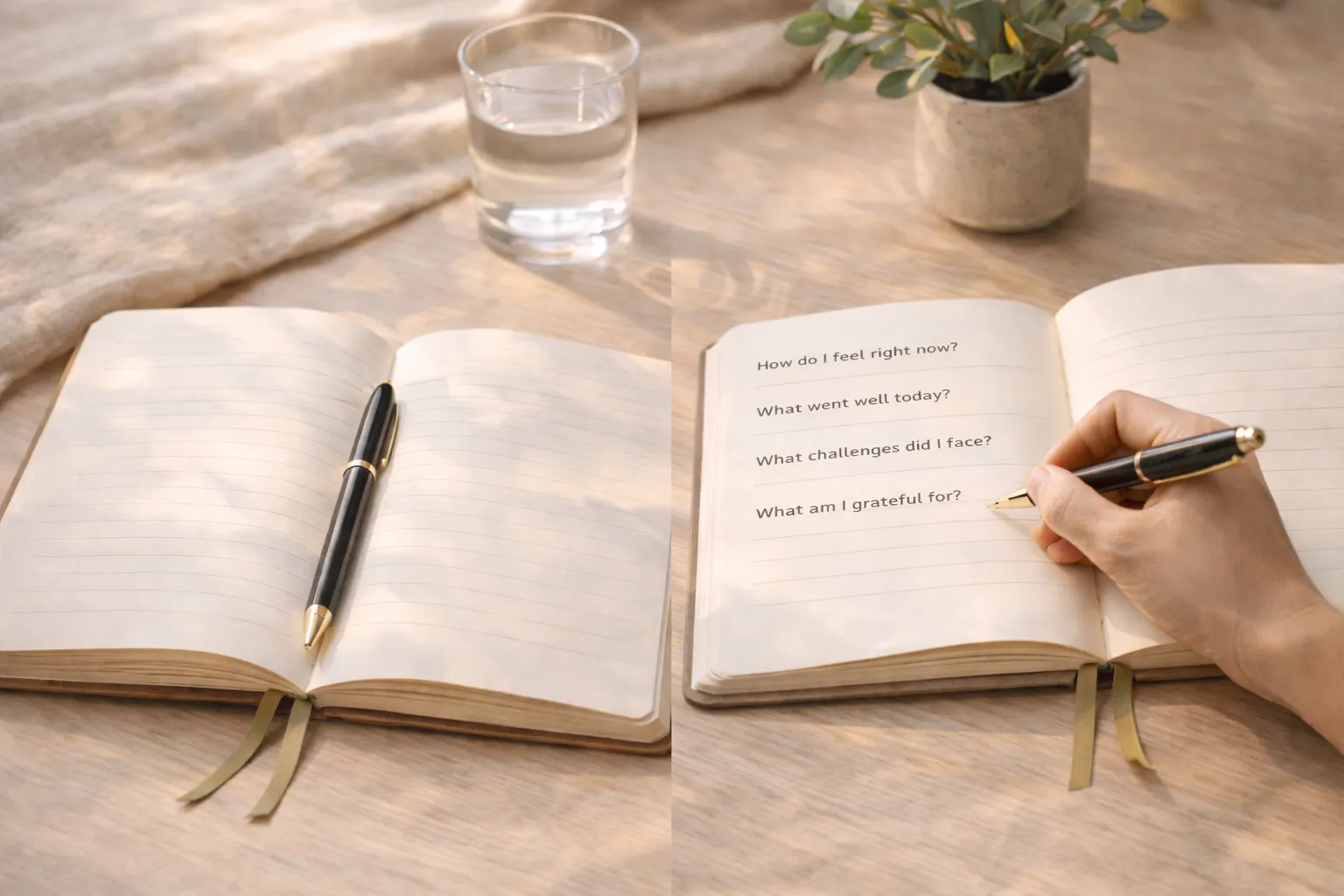
Free writing सुनते ही नियमों के बिना blank page याद आती है। Guided journaling सुनकर हर सवाल देने वाली workbook। असल entry में line इतनी साफ़ नहीं रहती: एक prompt से शुरुआत, तीन lines बाद उससे बाहर, फिर list, और अंत में open reflection—सब एक साथ हो सकता है।
Research भी neat नहीं है। Topics, time limits, populations, controls और outcomes बदलते रहते हैं। ज़्यादातर studies representative free-writing method को representative guided method से randomly compare नहीं करतीं। इसलिए honest answer यह नहीं कि कोई side wins; सवाल evidence से बड़ा है।
पहले तय करो कि comparison किसका है
इन सबको journaling कहा जा सकता है, पर ये interchangeable नहीं हैं:
- बिना topic जो आए वह लिखना;
- दिन chronological order में record करना;
- एक open question का जवाब;
- gratitude list;
- CBT thought record;
- therapist-delivered writing treatment;
- experimental-disclosure study।
Manual और therapist वाली clinical treatment commercial prompt app का evidence नहीं। Gratitude letter morning affirmations prove नहीं करती। Expressive-writing protocol हर blank page की test नहीं।
Pennebaker protocol दोनों caricatures के बीच है
James Pennebaker से जुड़ी classic experimental-disclosure instructions topic और boundary देती हैं: stressful experience से जुड़े thoughts और feelings explore करो, अक्सर 15–20 मिनट, तीन या चार occasions। उस frame के भीतर words की freedom होती है।
यह “कुछ भी लिखो” से directed है, fixed fields वाली worksheet से कम prescriptive। इसे general writing philosophy का proof नहीं, specific research intervention कहना सही है।
Frattaroli की 2006 meta-analysis ने 146 randomised experimental-disclosure studies को pool करके varied outcomes में small positive average effect (r = 0.075) report किया। उसने procedures और instruction features से associated moderators भी बताए।
Moderators कई तरह से अलग studies की तुलना करते हैं। वे बाकी सब same रखकर “specific prompt” और “blank page” randomise करने जैसा नहीं हैं। Future hypotheses मिल सकती हैं; structure universally superior साबित नहीं होती।
“More structure works better” में तीन problems
पहला, categories बाद में assign होती हैं। Participants words चुनते हैं इसलिए Pennebaker instruction free कहलाए, या topic और time fixed हैं इसलिए guided—study same रहती है, winner label से बदल जाता है।
दूसरा, ongoing problem का plan, positive-experience prompt और trauma-focused writing एक structure scale के levels नहीं। Outcome topic, population, comparator, dose, support या measurement से बदला हो सकता है।
तीसरा, moderator association causal trial नहीं। Larger effects के साथ मिला feature दूसरी study differences में उलझा हो सकता है। Evidence सिर्फ़ narrow statement support करती है: instructions matter कर सकती हैं; useful direction defined task और population में empirical question है।
Open emotional writing backfire कर सकती है?
कुछ लोगों के लिए unhelpful हो सकती है, मगर popular claims फिर भी study से आगे जाती हैं। Sbarra और साथियों ने marital separation के बाद adults को study किया। Rumination-related characteristics में high subgroup को narrative expressive-writing condition में worse outcomes मिले।
यह important safety signal है, blank-page writing पर universal ban नहीं। Study ने हर व्यक्ति, topic या free-writing form test नहीं की।
सबसे painful topic से खुद को force मत करो। Boundary रखो और बाद में state check करो। Writing लगातार distress बढ़ाए, daily life disturb करे या same loop में फँसाए, तो topic बदलो या रुक जाओ। Discomfort को progress मत मानो। Symptoms बने रहें या safety risk हो, तो professional या emergency help लो। Journaling और mental-health guide इन limits को विस्तार से देखती है।
Specific guided interventions क्या बताती हैं?
Positive Affect Journaling
Smyth और साथियों ने elevated anxiety symptoms वाले medical sample में defined web programme test की। Design, sample, schedule, comparator और outcomes उसी intervention के हैं। Trial guided journaling को generally anxiety के लिए best नहीं बनाती, न effect size app user पर transfer करती है।
CBT thought records और Written Exposure Therapy
Thought records CBT के भीतर homework tools हैं। CBT या homework adherence का evidence written grid को independent treatment की तरह isolate नहीं करता। Written Exposure Therapy clinical care में manualised PTSD treatment है; इसकी trials consumer journaling styles compare नहीं करतीं। Therapist, eligibility, safety procedures और treatment context हटाकर private trauma journal का proof बनाना गलत होगा।
Gratitude और commercial templates
The Five Minute Journal gratitude, intentions, affirmations, highlights और self-improvement prompts जोड़ती है। Branded product और exact routine peer-reviewed trials में establish नहीं हुई। Separate gratitude list या “three good things” study combination, daily schedule या five-minute dose automatically validate नहीं करती।
Prompt कब useful है
Prompt practical problem solve करे, तभी जगह earn करती है। “अभी सबसे ज़्यादा attention क्या ले रहा है?” topic choices घटाती है। “क्या known, assumed और unknown है?” tangled decision खोलती है। “कौन-सा part influence कर सकता हूँ?” boundary देती है। “आज का कौन-सा detail खो जाएगा?” memory बचाता है। “Page बंद करने के बाद क्या चाहिए?” writing close कराता है।
ये editorial questions हैं, validated interventions नहीं। Value friction घटाने या boundary बनाने में है।
Blank page कब useful है
Open writing suit कर सकती है जब topic clear हो, purpose idea explore करना, memory, creativity या self-expression हो, या fixed templates answers को performed महसूस कराएँ। Symptom reduction claim के बिना भी writing thought, record और craft की तरह worthwhile है।
Hybrid experiment है, optimum नहीं
एक purpose चुनो, एक question या सिर्फ़ title लो, manageable stopping point रखो, फिर prompt को form समझकर complete करने की जगह material follow करो। End पर note करो कि structure ने help, constrain या no difference किया।
| Situation | Test करने लायक format | क्या infer न करें |
|---|---|---|
| Blank-page friction | एक broad question | Question anxiety treat करती है |
| Idea clear है | Open writing | Freedom clinically superior है |
| Active practical problem | Facts, options, next action | Planning emotion solve करती है |
| Sensitive material | Bounded, tolerable topic | Distress means progress |
| Habit या memory log | Fixed small fields | Streak health benefit देता है |
Personal comparison interface fit बताती है, therapeutic effect नहीं।
Apps को इसी lens से देखो
Day One open canvas से शुरू होती है और prompts optional रखती है। Journey free entries के साथ guided programmes देती है; specific product-level evidence के बिना उन्हें editorial content मानो। The Five Minute Journal questions और timing fixed करती है, जिससे decisions घट सकते हैं; convenience clinical validation नहीं।
OwnJournal open entries और mood/activity fields support करती है, और files connected Google Drive, Dropbox, Nextcloud या iCloud में रखती है—OwnJournal content store में नहीं। E2EE optional है; Simple mode provider के पास readable copies छोड़ सकती है। Mood–activity correlation descriptive है, किसी activity से feeling cause होने का proof नहीं।
CBT-oriented apps thought-record forms copy कर सकती हैं। Company worksheet, coached programme या regulated clinical care में से क्या देती है, यह check करो; वे equivalent नहीं। Broader trade-offs के लिए 2026 journaling apps और journal privacy guide देखो।
Honest bottom line
Literature free writing या guided journaling को universal winner establish नहीं करती। वह narrower interventions को, अक्सर controls से, test करती है; popular categories overlap भी करती हैं।
Structure practical reason से चुनो—start, organise या stop करने में मदद हो। Openness practical reason से—जो कहना चाहते हो उसे space मिले। First choice fit न हो तो बदलो। Writing sustained harm करे तो रुक जाओ।
अक्सर पूछे जाने वाले सवाल
खुलकर लिखना ज़्यादा फ़ायदेमंद है या तय सवालों के जवाब देना?
Literature कोई साफ़ head-to-head verdict नहीं देती। दोनों labels में कई activities आती हैं, और ज़्यादातर trials एक defined intervention की control से तुलना करती हैं—representative free और guided formats को आपस में नहीं। Between-study moderator findings instructions पर hypotheses दे सकती हैं, universal winner establish नहीं।
क्या खुली डायरी से चिंता या उदासी और बढ़ सकती है?
Emotionally intense writing कुछ लोगों के लिए unhelpful हो सकती है या distress बढ़ा सकती है। Separation के बाद हुई एक study में high-rumination characteristics वाले specific subgroup को narrative expressive-writing condition में worse outcomes मिले, लेकिन यह हर blank-page writing की test नहीं थी। अपनी response देखो, distress बना रहे तो intensity घटाओ या रुक जाओ, और ज़रूरत पर appropriate care लो।
क्या Five Minute Journal के पीछे कोई पक्का सबूत है?
Branded product और उसकी exact combined routine peer-reviewed trials में establish नहीं हुई। Gratitude, goals और reflection के कुछ adjacent exercises study हुए हैं, जिनके results mixed और conditional हैं। Separate components का evidence product, combination या five-minute dose validate नहीं करता।
चिंता के लिए कौन-सी डायरी सबसे काम की है?
Anxiety के लिए कोई journal format best establish नहीं है। Specific interventions की trials—जिनमें medical sample की web-based Positive Affect Journaling programme शामिल है—broad categories rank या individual benefit guarantee नहीं करतीं। Journaling adjunct हो सकती है; persistent या severe anxiety evidence-based care deserve करती है।
शुरुआत करने वालों को सवाल चुनने चाहिए या खुलकर लिखना चाहिए?
वह option use करो जो अभी का barrier हटाए। Page बहुत open लगे तो prompt topic choice घटा सकती है; क्या लिखना है पहले से clear हो तो free writing space बचाती है। हल्के frame में freedom वाला hybrid practical experiment है, scientifically proven optimum नहीं।
Pennebaker की एक्सप्रेसिव राइटिंग method आख़िर है क्या?
Classic experimental-disclosure studies में participants अक्सर stressful experience से जुड़े thoughts और feelings पर करीब 15–20 मिनट, तीन या चार बार लिखते हैं। यह semi-directed research protocol है, pure free writing नहीं; इसका small average effect ordinary journaling को overall validate नहीं करता।
और पढ़ो
- Mental-health journaling prompts — evidence boundaries वाले editorial prompts
- Journaling और mental health — effect sizes, uncertainty और safety
- 2026 की best journaling apps — features, pricing, platforms और storage
- क्या journal सच में private है? — privacy label से आगे threat models
- Anxiety और depression journaling apps — app features, treatment ranking नहीं